Ozempic Hair Loss: When Can FUE Help?
Written by ReGrow Medical Editorial Team.
Medically reviewed by Dr. Amiel Moshfegh, M.D.
Published . Updated .
Short answer: Hair shedding during treatment with Ozempic or another GLP-1-based medication does not automatically mean you need a hair transplant. Rapid weight change, reduced food intake, physical stress, and other factors can contribute to temporary diffuse shedding called telogen effluvium. FUE may become worth considering later only if the shedding has settled, a clinician identifies stable permanent pattern loss, and the donor area is suitable.
- Do not stop or change a prescribed GLP-1 medication on your own. Speak with the clinician who prescribed it.
- Get the type of hair loss evaluated. Temporary shedding, hereditary pattern loss, and inflammatory conditions require different plans.
- Do not rush into surgery while diffuse shedding is active. Waiting can clarify which hair may recover and protect a limited donor supply.
This article provides general education. It does not diagnose hair loss, recommend medication changes, or determine surgical candidacy. Individual experiences and results vary.
What Does “Ozempic Hair Loss” Actually Mean?
“Ozempic hair loss” is a common search phrase, but it is not a single medical diagnosis. Ozempic and Wegovy contain semaglutide, while Mounjaro and Zepbound contain tirzepatide. These medicines have different approved uses, and the reason for hair shedding cannot be determined from a brand name alone.
The evidence is still developing. The American Academy of Dermatology explains that thinning reported during GLP-1 treatment may relate to rapid weight loss, reduced intake of protein or other nutrients, a direct medication effect, or more than one factor. A 2026 systematic review and meta-analysis also found an association between GLP-1 receptor agonist use and reported hair loss, but an association does not identify the cause in an individual patient.
It is also possible for temporary shedding to reveal hereditary thinning that was already developing. The goal of evaluation is to separate what may recover from what may represent a stable, transplantable pattern.
Why Can Hair Shedding Happen During GLP-1-Assisted Weight Loss?
A major weight change can shift the hair cycle
A substantial physical change can move more follicles than usual into a resting phase. Those hairs may shed a few months later. The AAD describes this excessive shedding as telogen effluvium and lists significant weight loss among its common triggers.
Reduced intake may affect hair growth
Some people eat much less while taking a GLP-1 medication. If overall nutrition, protein, or relevant micronutrients become inadequate, hair growth may be affected. This does not mean everyone needs a supplement or the same laboratory tests. A prescribing clinician, dermatologist, or registered dietitian can decide whether an individual evaluation is appropriate.
Another type of hair loss may be present
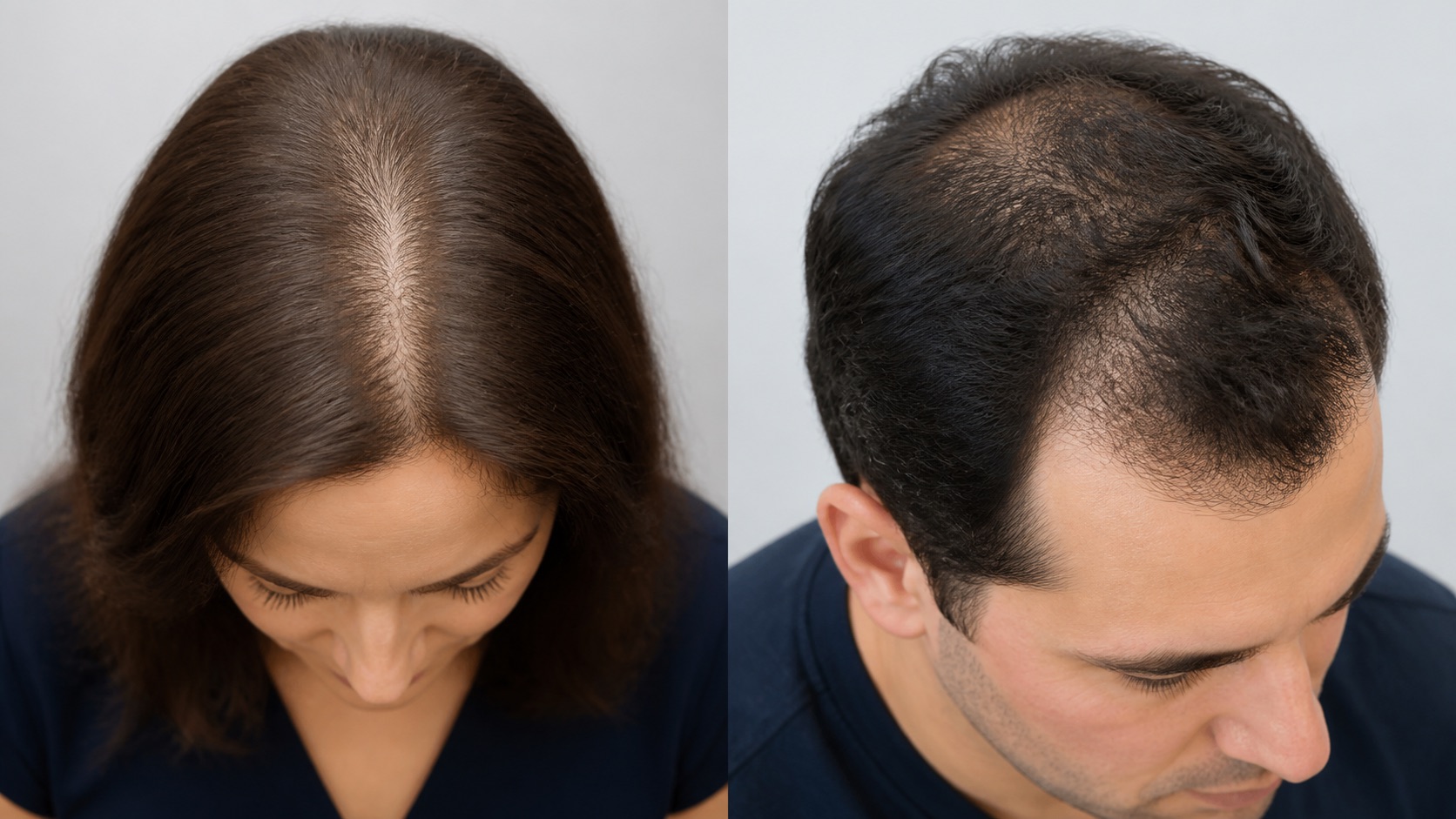
Androgenetic alopecia—also called male or female pattern hair loss—can occur at the same time as telogen effluvium. If diffuse shedding improves but a receding hairline, widening part, or thinning crown remains, the persistent pattern may need separate evaluation.
Temporary Shedding or Permanent Pattern Hair Loss?
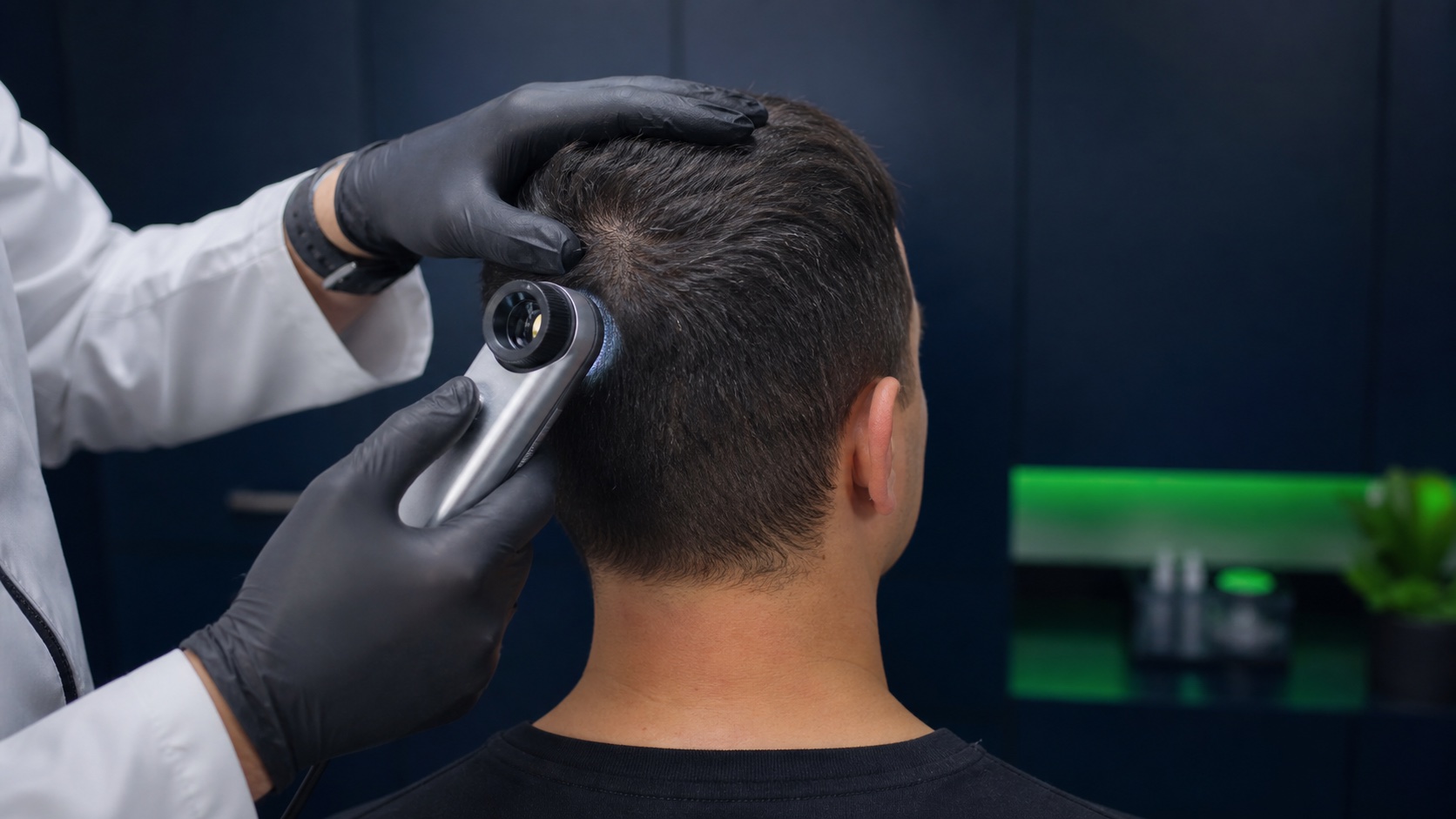
The pattern and timeline can provide clues, but they cannot replace a scalp examination.
| What you notice | What it may suggest | Useful next step |
|---|---|---|
| New shedding from across much of the scalp during rapid weight change | Telogen effluvium may be possible | Speak with the prescriber and arrange hair-loss evaluation if needed |
| Gradual recession, a widening part, or a thinning crown | Pattern hair loss may be contributing | Obtain a diagnosis and discuss long-term options |
| Patchy loss, pain, burning, heavy scale, inflammation, or scar-like skin | Another medical condition may be present | See a board-certified dermatologist before cosmetic treatment |
| Diffuse thinning that also affects the donor region | Donor stability may be uncertain | Do not rush surgery; the donor area needs direct evaluation |
For help choosing the appropriate professional, see our guide to dermatologists, trichologists, and hair-transplant physicians.
Will Hair Grow Back?
Hair affected by telogen effluvium often begins to recover after the underlying trigger settles and the body readjusts. The process is gradual rather than immediate, and the timeline varies. Continuing rapid weight change, limited nutrition, illness, stress, or an additional hair-loss condition can affect recovery.
This uncertainty is one reason an immediate transplant can be premature. Surgery cannot restore a follicle that is temporarily resting any better than the follicle can recover on its own. A responsible plan allows enough time to understand what is temporary and what is permanent.
What Should You Do When Shedding Begins?
- Talk with the prescribing clinician. Review the timing of treatment, weight change, other symptoms, and your overall plan. Do not skip, delay, or stop medication without medical guidance.
- Seek a hair-loss diagnosis. A dermatologist can help distinguish telogen effluvium from pattern loss, alopecia areata, inflammatory disease, or another cause.
- Review nutrition appropriately. Ask a qualified clinician or registered dietitian whether your intake meets your needs. Avoid high-dose “hair” supplements based only on online advice.
- Document the pattern. Take photographs of the hairline, part, crown, and donor area in consistent lighting and styling.
- Allow the pattern to become clear. There is no universal waiting period. The important questions are whether active shedding has settled and whether permanent loss remains.
Our broader guide compares medical and surgical hair-loss options, but the correct starting point remains diagnosis rather than choosing a product or procedure.
When Could FUE Become Appropriate?
Follicular unit excision (FUE) redistributes selected follicles from a donor area to areas where permanent thinning remains. It does not treat the trigger for active diffuse shedding.
An FUE evaluation may become reasonable when:
- the type and likely course of the hair loss have been evaluated;
- rapid or unexplained shedding is no longer active;
- health and weight are sufficiently stable for an elective procedure;
- a lasting pattern of recession or thinning remains;
- the donor area contains enough suitable, stable hair; and
- the expected improvement is realistic for the available donor supply.
The AAD notes that hair-transplant candidates need enough healthy donor hair and the ability to grow hair in the recipient area. Review the other factors used to assess hair-transplant candidacy before treating a temporary shed like a permanent loss.
When Is It Better to Wait?
Waiting may be the safer choice when shedding is accelerating, the cause is unclear, weight is changing rapidly, nutritional concerns remain unresolved, the donor area is also thinning, or the scalp shows inflammation or possible scarring.
Waiting is not a rejection of treatment. It can protect the donor supply, prevent unnecessary surgery, and allow a more accurate long-term plan.
What Can a ReGrow Medical Consultation Evaluate?
A ReGrow Medical consultation can focus on whether a stable area of permanent thinning and a suitable donor region are present. The discussion may include the timing and distribution of loss, donor density and stability, scalp condition, medical and medication history, prior treatments, and realistic restoration goals.
A hair-restoration consultation does not replace care from the clinician prescribing a GLP-1 medication or a dermatologist evaluating active or unexplained shedding. Sometimes the most appropriate outcome is to complete that medical evaluation first and revisit FUE later.
ReGrow Medical has six Southern California locations for patients who are ready for an individualized surgical-candidacy discussion.
Frequently Asked Questions
Does Ozempic cause hair loss?
Hair loss has been reported during GLP-1 treatment, and emerging research suggests an association. However, rapid weight change, reduced nutrition, illness, stress, hereditary thinning, and other conditions may contribute. A report or timeline alone cannot prove the cause for one person.
Is hair loss after Ozempic permanent?
Not necessarily. Telogen effluvium can improve after the underlying trigger settles, while hereditary pattern loss can continue. Some people have both at the same time, so persistent thinning should be evaluated rather than assumed to be temporary or permanent.
How soon after starting a GLP-1 medication can shedding appear?
Telogen effluvium is often delayed, so shedding may become noticeable a few months after a major weight or health change. Timing can support the history, but it does not establish the diagnosis by itself.
Should I stop Ozempic if my hair is shedding?
Do not stop or change a prescribed medication on your own. Speak with the prescribing clinician, who can consider the treatment benefits, weight-change rate, nutrition, other symptoms, and whether any adjustment is medically appropriate.
Can FUE treat telogen effluvium?
FUE is generally not the first approach for active temporary shedding because it moves follicles rather than correcting the trigger. It may be considered later only if the shedding settles and a stable area of permanent pattern loss remains.
How long should I wait before considering a hair transplant?
There is no universal number of months. Timing depends on the diagnosis, whether shedding has settled, health and weight stability, donor-area findings, and whether permanent thinning remains. A clinician should make that assessment individually.
Can I have FUE while taking semaglutide or tirzepatide?
Possibly, but the hair-restoration team and prescribing clinician need an accurate medication history and an individualized plan. Do not change the dose or schedule on your own before a procedure.
When should I see a dermatologist?
Arrange dermatology evaluation when loss is sudden, patchy, painful, inflamed, scarring, rapidly worsening, affecting the donor area, or otherwise unexplained. A dermatologist can also help distinguish temporary shedding from a separate hair-loss condition.
The Bottom Line
New shedding during Ozempic, semaglutide, tirzepatide, or another GLP-1 treatment does not automatically mean permanent hair loss—and it does not automatically mean you need a transplant.
The safest sequence is to identify the type of loss, address possible triggers with the appropriate clinicians, observe whether temporary shedding recovers, and consider FUE only if a stable area of permanent thinning remains. That approach protects both your health and your limited donor supply.
If your shedding has settled and you still have a receding hairline, thinning crown, or another stable area of loss, you can request a consultation with ReGrow Medical to discuss whether an FUE evaluation may be appropriate.