Natural-Looking Eyebrow Transplants in Los Angeles: How Brow Design Works
Written by ReGrow Medical Editorial Team.
Medically reviewed by Dr. Amiel Moshfegh, M.D.
Published . Updated .
If you are considering an eyebrow transplant in Los Angeles, “fuller” may be only part of what you want. You may want to fill an outer tail, soften a gap, or regain definition while keeping the expression that feels like you.
An eyebrow transplant can create natural-looking brows, but the result depends on more than adding hair. The plan needs to account for shape, the characteristics of the donor hair, placement direction, and how the transplanted hairs will be maintained. No technique or graft count guarantees a particular appearance.
This guide focuses on the design decisions to discuss before treatment. For an overview of the procedure, visit ReGrow Medical’s eyebrow transplant service page.
In this guide: Brow shape · Hair direction · Donor hair · Reading results · Your consultation · Los Angeles appointments · Common questions
Start With the Brow You Want to Keep
A useful design conversation starts with what you like about your existing brows. Point out the features you want to preserve before discussing what to add. “Keep my arch and fill this gap” describes a different goal from “make both brows broader.”
The International Society of Hair Restoration Surgery (ISHRS) describes brow restoration as a collaborative process in which the patient and physician agree on an outline that works with the face. The evaluation also needs to establish the cause of missing hair and whether the skin and underlying condition are suitable for treatment.
Bring an older photograph of yourself if it shows a shape you would like to regain. Inspiration photographs can help explain a preference, but ask what would need to change to make that preference work for your own face and available hair.
Discuss the front, arch, and tail separately
A clinical review of eyebrow restoration describes distinct regions and hair patterns across the brow. The inner portion, central body, and outer tail are not simply repeated sections of the same design. Existing hair and earlier photographs can help guide reconstruction.
Use the proposed outline to discuss three choices: where the brow begins, where you want its fullest area, and how the outer end should finish. Ask to see the plan on your face before committing. If one part feels too wide or too high, that is the time to say so.
Why Hair Direction Matters as Much as the Outline
A pencil sketch shows the boundary of a brow; it does not show how each hair will sit. The same clinical review explains that placement angle, alignment, and direction influence the finished appearance. Hair patterns change across the eyebrow, so planning involves more than filling a shape uniformly.
Ask your surgeon to explain the difference between the outline and the placement plan. A helpful question is: “How will the new hairs blend into the direction of the hairs I already have?” You do not need to choose surgical angles yourself; you do need to understand the intended result and its limitations.
Clinical experience also matters. A published case series of 352 eyebrow-restoration patients emphasized anatomical knowledge and placement technique. Some patients needed additional treatment or makeup despite generally favorable results. The study used strip-harvested donor hair, so its findings should not be treated as a success-rate prediction for ReGrow’s FUE procedures.
Choosing Hair That Suits an Eyebrow
The hair being moved matters as much as where it is placed. Ask how your donor hair’s thickness and curl compare with your existing brow hair, and what differences you might notice once it grows.
In a 2021 study of long-hair FUE in 36 eyebrow-transplant patients, Park and colleagues highlighted the value of seeing the hair’s curl during selection and placement. The series included patients seeking revision after earlier procedures, including problems with curl matching. This supports discussing hair characteristics, but it does not establish that one technique is best for every patient.
If you are interested in a procedure that preserves more hair length, ask which approach is appropriate for you. “No-shave” and “long-hair” should not replace an explanation of how donor hairs will be selected and how the proposed method relates to your goals.
More grafts do not explain the whole design
A quote with a larger graft count does not tell you which areas will receive those grafts or how the edges will be treated. Ask for the proposed distribution, whether the estimate covers one or both brows, and whether the goal is filling selected gaps or reconstructing a broader area.
Also ask how the clinic will evaluate the result before discussing any additional session. In the long-hair FUE series, four patients underwent a small touch-up to increase density. That is a finding from one study, not a forecast of your need for further treatment or a ReGrow outcome statistic.
How to Read Eyebrow Transplant Before-and-After Photos
Look beyond the overall impression of a fuller brow. Use photographs to form questions for the consultation, rather than choosing a result as though it were a template you could order.
- Starting point: Was the patient filling small gaps, rebuilding a tail, or restoring most of the brow?
- Timing: How long after surgery was the photograph taken? A newly completed procedure is not a healed growth result.
- Presentation: Are the lighting, head position, and camera distance comparable? Is makeup or styling product visible?
- Close detail: Can you see the individual hairs and their direction, as well as the overall shape?
- Maintenance: What trimming or styling was needed to produce the photographed appearance?
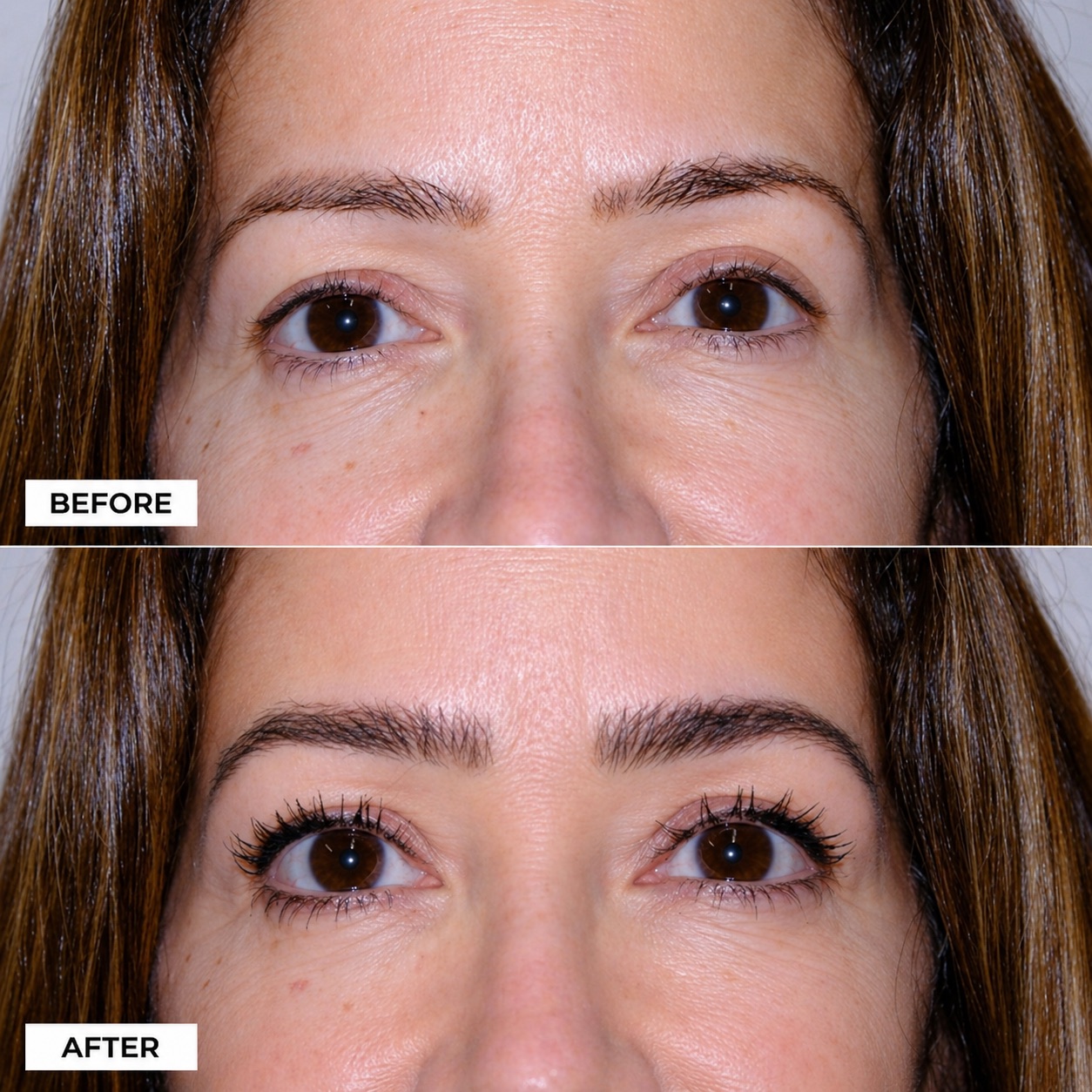
See more ReGrow Medical before-and-after results, then bring questions about examples that resemble your starting point. A photograph cannot establish your candidacy, predict your graft growth, or show every aspect of a patient’s care.
Natural-Looking Does Not Mean Maintenance-Free
Transplanted scalp hair can continue growing longer than native eyebrow hair. Cleveland Clinic’s patient guidance explains that trimming may be needed and that visible growth takes time. Ask about maintenance before deciding on surgery, including when your surgeon will clear you to begin grooming.
For the everyday routine after healing, read Life After an Eyebrow Transplant: Trimming, Styling, and Everyday Care. The goal is to choose a result whose upkeep you understand, rather than assume you will never use a brush, scissors, or brow product again.
Eyebrow transplantation is surgery. Risks can include scarring, infection, swelling, bruising, altered sensation, and loss of transplanted follicles. Cleveland Clinic recommends discussing those risks and your expectations during the consultation. An attractive design does not remove surgical risk or guarantee that all grafts will grow.
Six Questions to Bring to an Eyebrow Design Consultation
- What should stay the same? Identify the existing shape or expression you want to preserve.
- What can realistically change? Ask which gaps or shape concerns the proposed treatment is intended to address.
- Why this donor hair? Discuss texture, curl, and the differences between donor hair and native brow hair.
- Who performs each step? Ask who evaluates you, approves the design, performs the surgical steps, and manages follow-up.
- What happens if growth or direction disappoints me? Ask how concerns are assessed, when results are reviewed, and what any additional treatment might involve.
- What is included in the quote? Request the complete price, treatment scope, follow-up arrangements, and terms for any further procedure.
Bring photographs, a list of medicines and previous brow treatments, and a short description of the result you want. Tell the clinician about previous microblading, tattooing, surgery, or skin problems rather than assuming those details will be obvious from a photo.
Planning an Eyebrow Transplant Consultation in Los Angeles
ReGrow Medical’s Los Angeles location is at 5757 Wilshire Blvd, Suite PR2A, Los Angeles, CA 90036. When scheduling, confirm where your consultation and any proposed procedure will take place, along with the follow-up arrangements.
You can also explore our Sherman Oaks and West Hollywood locations, or view all California locations. Choose an appointment location you can realistically return to, and discuss work, travel, and personal commitments when planning treatment.
START WITH YOUR OWN BROW DESIGN
Discuss Your Eyebrow Goals With ReGrow Medical
Bring the shape you like and the questions you want answered. A consultation can help clarify candidacy, donor-hair options, maintenance, and individualized pricing.
Frequently Asked Questions
Can an eyebrow transplant look natural?
Yes, natural-looking results are possible. Shape, hair characteristics, placement, healing, and ongoing grooming all matter. A consultation and comparable patient photographs can help set expectations, but neither guarantees your result.
Can I choose my eyebrow shape?
You can explain the shape you want and review a proposed outline with your clinician. Ask which parts are realistic for your face, existing brows, skin, and donor hair before agreeing to treatment.
Does FUE automatically produce a natural eyebrow?
No. FUE describes how donor follicular units are removed. It does not by itself specify brow shape, hair selection, or placement direction. Ask for an explanation of the complete plan.
Will my eyebrows need trimming afterward?
They may need ongoing trimming because the donor hairs usually come from the scalp. Discuss maintenance before surgery and follow your surgeon’s instructions about when grooming can begin.
How much does eyebrow design affect the cost in Los Angeles?
A useful quote should explain the proposed treatment area and scope, rather than give a price based on a design photograph alone. ReGrow provides individualized pricing after evaluation; request the total cost and what follow-up or additional treatment is included.
Where can I discuss eyebrow transplantation with ReGrow in Los Angeles?
ReGrow Medical’s Los Angeles location is at 5757 Wilshire Blvd, Suite PR2A, Los Angeles, CA 90036. Request a consultation and confirm the appointment location and procedure arrangements with the team.